

Trying to explain X-Men from beginning to end sounds reasonable until you remember that the X-Men have been rebooted, resurrected, retconned, erased, relaunched, and emotionally destroyed more times than any other superhero team.
This franchise does not move in a straight line, you now that if you’re an avid fan. It spirals. Aggressively.
Still, there is a coherent story if you zoom out far enough and stop arguing about minutiae. Let us walk you through the X-Men timeline from their creation in the 1960s to their current era, focusing on big shifts, defining moments, and why each phase mattered.
This is the version that makes sense. You’re welcome.
The Beginning: Charles Xavier Has an Idea
The X-Men begin in 1963 with a simple premise that somehow never stops working. Mutants exist. Humanity fears them. Charles Xavier believes coexistence is possible and builds a school to prove it.
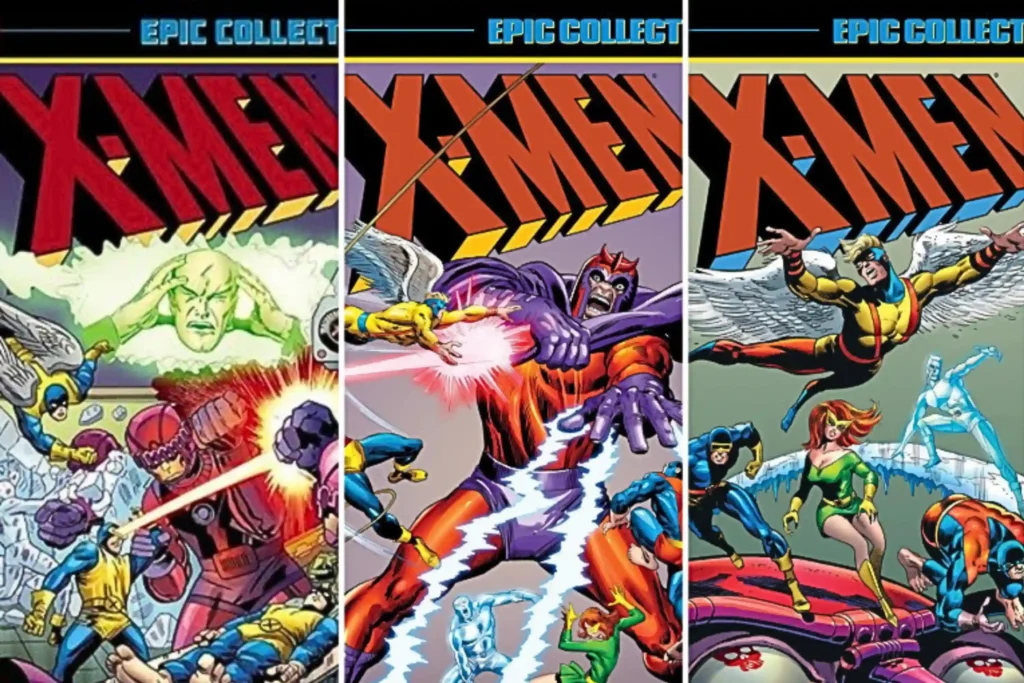
The original team is small and very earnest. Cyclops, Jean Grey, Beast, Angel, and Iceman train under Professor X while fighting Magneto, who immediately decides subtlety is optional.
Early X-Men stories are clunky by modern standards, but the foundation is strong. Fear of the other. Power without permission. Ideology as conflict.
This era matters because it introduces the moral split that defines the franchise forever. Xavier believes in peaceful integration. Magneto believes survival requires dominance. Every X-Men story after this is a remix of that argument.
The Wilderness Years: When Nobody Was Sure This Would Last
After the initial run, the X-Men drift. Sales soften. Stories repeat themselves. Marvel keeps the book alive, but barely. For a while, the X-Men exist more as an idea than a flagship property.
This period is important mostly because it sets the stage for what comes next. The franchise needed reinvention, not refinement.
That reinvention arrives loudly.
The Relaunch That Saved Everything
In 1975, Giant-Size X-Men #1 drops and changes the franchise permanently.
The original team steps aside. A new, international lineup takes over. Wolverine. Storm. Colossus. Nightcrawler. This shift turns the X-Men from a niche superhero book into a global metaphor.
Chris Claremont takes over shortly after and stays for years. This is where the X-Men stop feeling episodic and start feeling like a saga. Characters grow. Relationships evolve. Trauma sticks. Continuity becomes a feature, not a bug.
If someone says they love X-Men, this is usually the version they mean.
The Claremont Era Is Where Everything Becomes Personal
The Claremont era defines X-Men from beginning to end more than any other stretch. This is where mutant stories become emotional and political without losing spectacle. Themes of identity, oppression, and power are baked directly into character arcs.
Major milestones pile up fast.
- The Phoenix Saga and Dark Phoenix Saga turn Jean Grey into a tragic icon
- Magneto becomes layered and sympathetic
- Wolverine shifts from mystery to moral problem
- Storm emerges as a leader with gravity
This era proves that superhero comics can sustain long-form storytelling. It also teaches Marvel a dangerous lesson. Readers will follow the X-Men anywhere if the characters feel real.
The 1990s Explosion: Popularity Goes Nuclear
The 1990s take everything Claremont built and crank the volume. Jim Lee’s art defines a generation. X-Men #1 becomes the best-selling comic of all time. The team fractures into multiple squads with overlapping agendas.
This era introduces more characters, more pouches, more guns, and more attitude. It also cements the X-Men as Marvel’s cultural engine. Cartoons. Toys. Video games. Mutants are everywhere.
Narratively, things get messy. Crossovers dominate. Stakes escalate constantly. Still, the core appeal holds. Found family. Ideological conflict. Power with consequences.
Love it or roast it, the 1990s make the X-Men unavoidable.
The Event Era: Trauma as a Scheduling Tool
By the late 1990s and early 2000s, the X-Men enter their event-heavy phase.
Big stories reshape the mutant population regularly. Genosha happens. Millions of mutants die. Readers are expected to keep up emotionally.
Grant Morrison’s New X-Men marks a tonal shift. Mutants feel strange again. Culture, fashion, and science collide. The school expands. The world reacts. Mutation becomes something society has to process, not just fear.
This era pushes the franchise forward conceptually, even when it makes people uncomfortable. The X-Men stop being outsiders on the fringe and start becoming a visible subculture.
Decimation? Everything Gets Smaller on Purpose
“House of M” ends with a whisper that echoes forever. “No more mutants.”
The mutant population collapses from millions to a few hundred. The X-Men shift from activism to survival. Stories become quieter, more desperate, and more focused on loss.
This period strips the franchise down to its emotional core. Who are the X-Men when extinction is no longer theoretical. Who leads. Who breaks. Who adapts.
Some fans find this era exhausting. Others find it clarifying. Either way, it reshapes the franchise again.
Schisms, Splits, and Time Travel Kids
The 2010s bring internal conflict to the forefront. Cyclops and Wolverine disagree on leadership. Teams fracture. Time-displaced younger versions of the original X-Men arrive and complicate everything emotionally and narratively.
This era explores legacy. What it means to grow into a symbol. What happens when you see your future and hate it.
It also reflects Marvel struggling to balance mutants within a larger cinematic universe that temporarily sidelines them. The stories remain ambitious, even when direction feels uncertain.
Krakoa: Mutants Rewrite the Rules
Then Jonathan Hickman shows up and flips the board.
Krakoa changes everything. Mutants establish a sovereign nation. Death loses its permanence. Villains become citizens. Resurrection becomes infrastructure. The X-Men stop asking for permission.
This era reframes mutants as a political power rather than a persecuted minority. It asks uncomfortable questions about unity, compromise, and moral trade-offs. Fans argue constantly, which is usually a sign the X-Men are doing their job.
Krakoa feels like an ending and a beginning at the same time. A culmination of decades of storytelling and a launchpad for something stranger.
So What Is the End of the X-Men
There is no clean ending. There never will be.
The X-Men from beginning to end form a loop, not a line. Fear leads to conflict. Conflict leads to adaptation. Adaptation reshapes the world. The world reacts. The cycle restarts.
That is why the franchise survives reboots, market crashes, and creative overhauls. The metaphor keeps regenerating.
Mutants change. The argument stays.
Where to Start Reading Without Losing Your Mind
If you want to experience X-Men from beginning to end without reading everything, focus on anchors.
- X-Men #1 for the origin
- Giant-Size X-Men #1 for the reinvention
- Dark Phoenix Saga for myth-making
- New X-Men for modern relevance
- House of M for collapse
- House of X for reinvention again
That path gives you the shape of the whole thing without drowning in continuity.
The X-Men Never Finish
The X-Men endure because they are built around change. Powers emerge. Societies react. People choose sides. That story never stops being useful.
From beginning to end, the X-Men remain Marvel’s most flexible idea. They absorb the fears of the moment and reflect them back with claws, lasers, and complicated feelings.
Which is why we keep coming back.