

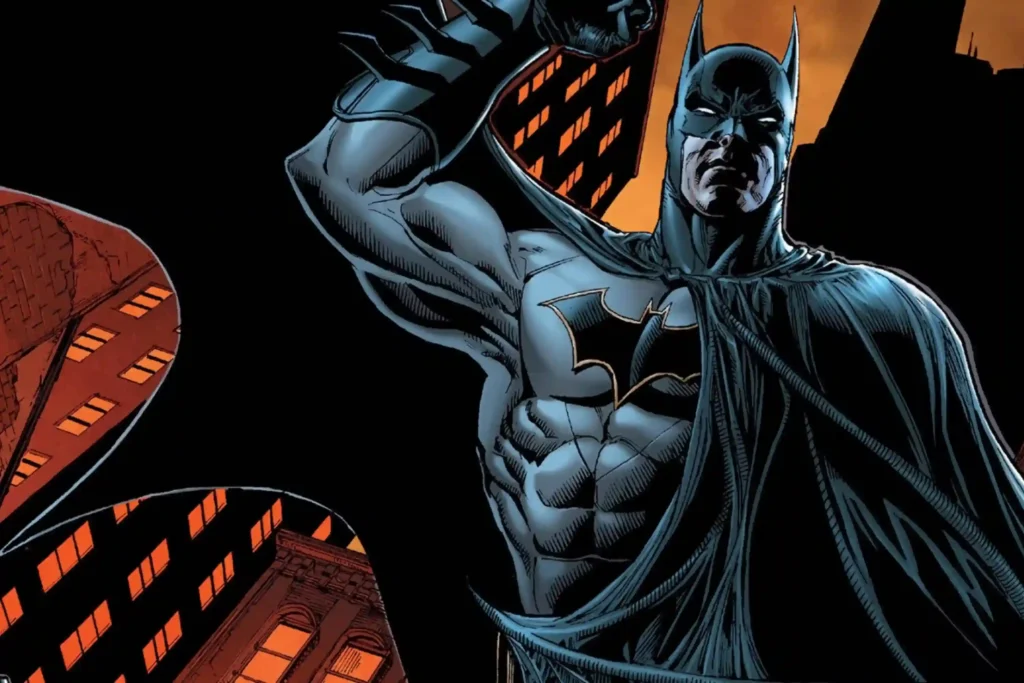
Searching for a Batman reading order feels like a trap because it kind of is.
Batman has been published continuously since 1939, rebooted multiple times, soft-rebooted even more times, and rewritten by creators who all assume their run is the one you should care about most. There is no single order that covers everything cleanly, and anyone who tells you otherwise is lying or selling a spreadsheet.
What does exist is a smart way to read Batman that respects continuity, highlights the best stories, and avoids drowning you in filler. This guide gives you that. It breaks Batman into eras, explains why each era matters, and shows you where to jump in depending on how deep you want to go.
This is Batman reading order for people who want clarity, not homework.
First Rule of Batman Reading Order
You do not need to read Batman from 1939 onward. Nobody does. Not even Batman.
Batman works in layers. Each major era resets the tone, updates the mythology, and quietly ignores parts of what came before. The trick is knowing which layers actually matter and which ones exist mostly for historians and completionists.
This guide focuses on modern-relevant Batman continuity, meaning stories that still get referenced, reprinted, adapted, and argued about.
For Marvel fans looking for something similarly sprawling, the Cable reading order covers decades of continuity across X-Force, X-Men, and beyond.
How Batman Continuity Actually Works
Batman does not have one timeline. He has eras. Each era redefines his origin, tone, and supporting cast while quietly discarding details that stopped being useful.
Understanding Batman reading order means understanding these eras and knowing where to enter them.
Think of Batman continuity as a remix album. Same core track. Different production choices.
Era One: Batman Begins Again and Again
Batman, Year One
This is non-negotiable.
Frank Miller and David Mazzucchelli strip Batman down to intent and failure. Bruce Wayne returns to Gotham with money and anger. He gets hurt. He makes mistakes. Jim Gordon arrives as a man trying to stay clean in a city that rewards corruption.
Every modern Batman story assumes this origin, even when it pretends not to.
Start here. Always.
Era Two: Gotham Before the Freaks
The Long Halloween
Batman operates in a city still ruled by organized crime. Costumed villains are rare. The mystery unfolds slowly. Violence feels personal rather than theatrical.
This story matters because it explains Gotham’s transition. It also reframes Batman as a detective who earns his reputation rather than inheriting it.
Dark Victory
A direct continuation that focuses on legacy, grief, and the consequences of escalation. Robin enters the picture. The emotional weight deepens.
Together, these two books form the spine of early Batman reading order.
Era Three: The Joker Stops Being Funny
The Killing Joke
This story changes the Joker forever. He stops being chaotic fun and becomes something colder. Something surgical.
Barbara Gordon is paralyzed. Commissioner Gordon is psychologically tortured. Batman and Joker become locked in a relationship that no longer resembles rivalry.
You do not need to agree with every creative choice to understand its impact. Batman stories never escaped this shadow.
Era Four: Loss Becomes Permanent
A Death in the Family
Jason Todd dies because readers voted for it. DC published it anyway.
This matters because it establishes that Batman’s failures have consequences that stick. Death stops being reversible. Guilt becomes part of the uniform.
Batman grows quieter after this. Harder. More controlled.
Era Five: Batman Breaks Physically
Knightfall
Bane arrives with patience instead of theatrics. He studies Batman. He exhausts him. He breaks him.
Knightfall introduces the idea that Batman’s willpower has limits. It also proves that replacing Batman is not as simple as wearing the suit.
This arc is long. Some parts drag. The core idea still defines Batman today.
Era Six: Gotham Falls Apart
No Man’s Land
An earthquake levels Gotham. The government abandons it. The city is declared lost.
Batman returns and rebuilds Gotham through presence rather than force. This arc shows Batman as a symbol holding a city together.
It is one of the most important Batman stories ever published. It also rewards patience.
Era Seven: The Modern Reset Button
Hush
Hush works because it understands its job. Reintroduce Batman. Reintroduce Gotham. Reintroduce the rogues gallery.
Jim Lee’s art gives the book its status. Jeph Loeb’s structure keeps it accessible. This is a checkpoint in Batman reading order. A place to orient yourself.
Era Eight: Batman as Myth
Grant Morrison takes over and decides Batman has survived everything, including bad continuity.
Batman and Son
Damian Wayne enters the story and refuses to be ignored. Batman confronts legacy in a way that feels aggressive rather than sentimental.
The Black Glove
Psychological warfare replaces brute force. Batman prepares for threats he cannot name yet.
Batman RIP
This is Batman dismantled mentally. Morrison explores the idea that Batman prepared for his own destruction.
This era rewards close reading and long-term payoff. It does not hold your hand.
Era Nine: Batman Disappears
Final Crisis
Batman “dies.” He does not actually die. Comics remain comics.
What matters is the aftermath.
Batman and Robin
Dick Grayson becomes Batman. Damian becomes Robin. The tone shifts. The dynamic changes.
This era proves Batman works as a role, not just a person.
Era Ten: The New 52, A Clean Jumping-On Point
DC resets continuity again.
Court of Owls
A secret society older than Batman that has controlled Gotham for centuries. Simple premise. Flawless execution.
This is one of the best Batman stories ever published. It is also one of the easiest entry points.
City of Owls
The fallout. Gotham pushes back.
Death of the Family
The Joker returns with precision and cruelty. This story focuses on emotional control rather than spectacle.
It reinforces Batman’s isolation as his greatest weakness.
Zero Year
A modernized origin that emphasizes scale, technology, and chaos. It complements Year One without replacing it.
Era Eleven. Rebirth and Emotional Examination
I Am Gotham
I Am Suicide
I Am Bane
Tom King focuses on Batman’s psychology. Trauma becomes the antagonist. Relationships matter more than gadgets.
This era is divisive. It is also intentional.
The Wedding
Expectation meets subversion. This arc is about fear, not romance.
City of Bane
Batman stripped of control again. Gotham under occupation. The cycle repeats.
If You Want a Short Batman Reading Order
Efficiency mode.
- Year One
- The Long Halloween
- The Killing Joke
- Knightfall
- No Man’s Land
- Hush
- Court of Owls
This gives you evolution, escalation, and payoff without exhaustion.
Standalone Batman Stories That Always Work
These sit outside strict continuity.
- The Dark Knight Returns
- Arkham Asylum. A Serious House on Serious Earth
- Batman. Earth One
Each explores a different version of the same myth.
Final Advice From Someone Who Has Read Too Much Batman
Batman reading order is about intention. Decide whether you want history, tone, or momentum. Choose accordingly.
Batman survives every reboot because the core idea holds. Fear as a tool. Discipline as identity. Gotham as a mirror.
Read the stories that respect that, and skip the rest without guilt. For readers who’ve finished the big DC runs and want to explore Wildstorm’s connected universe, the Stormwatch reading order is the clearest entry point into that corner of comics history.
Batman would approve.