

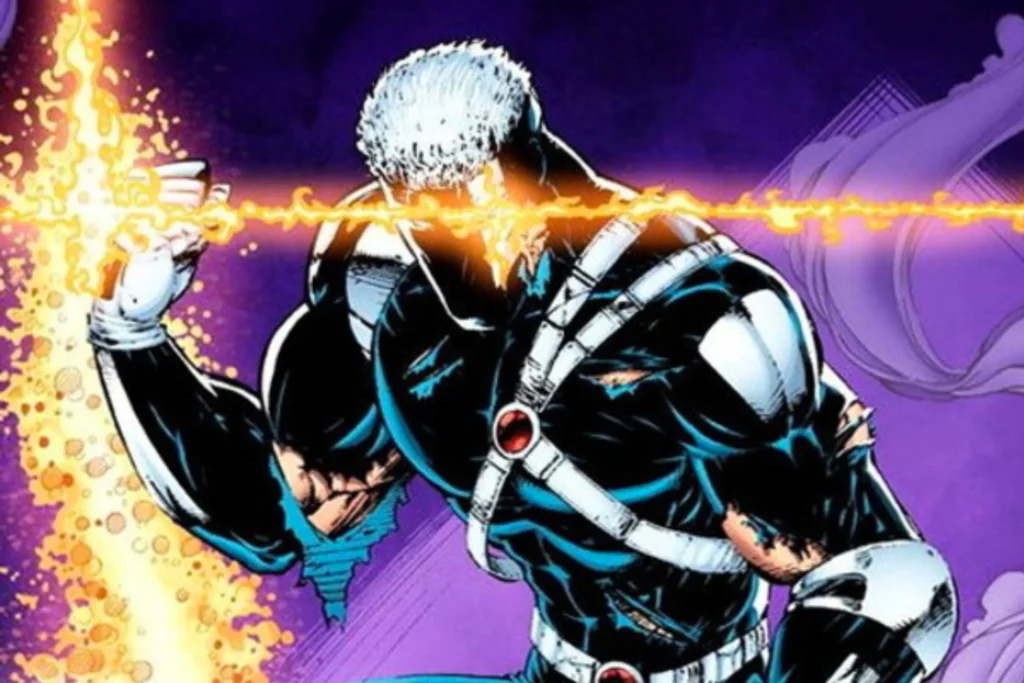
Every few months someone searches backlash marc slayton and accidentally drags Marvel into the conversation.
No.
Backlash is WildStorm. He was born in the Jim Lee Image era. He came out of the same creative explosion that gave us StormWatch, WildC.A.T.s, Gen¹³, and an entire 90s superhero ecosystem fueled by shoulder pads and trauma.
If you are here because you typed backlash marvel comics, I forgive you. Briefly. The 90s aesthetic overlap is real. Jim Lee came from X-Men. The art feels familiar. The military tone feels adjacent.
Still wrong.
Backlash is Marc Slayton of the WildStorm Universe. He is Team 7 legacy. He is psionic whips and battlefield command. He is one of the connective tissues that keeps early WildStorm continuity from collapsing into pure chaos.
Let’s talk like adults who remember 1993.
Who Is Backlash (Marc Slayton)
Backlash is Marc Slayton. Codename earned. Not ironic.
He first appears in WildC.A.T.s Covert Action Teams #1 (1992) as part of the wider Team 7 backstory machinery that Jim Lee and Brandon Choi were building behind the scenes. His full presence expands through Team 7 flashback material and later into his own solo series.
Core identity details for collectors:
- Real Name: Marc Slayton
- Alias: Backlash
- Universe: WildStorm
- Publisher at debut: Image Comics
- Key teams: Team 7, StormWatch
- First major spotlight era: Mid 90s, especially 1994 onward
He operates as a former black ops soldier who survives the Team 7 incident. That incident is the radioactive nerve center of early WildStorm lore. It is the event that unlocked latent metahuman potential in several members.
Marc does not just survive. He evolves.
Backlash becomes the veteran presence in a universe that constantly escalates power levels. When younger heroes are still figuring out what their powers do, he is already managing battlefield tactics.
He carries experience. He carries guilt. He carries psionic weapons that look like someone weaponized a psychic lasso and decided subtlety was overrated.
If you searched who is backlash in marvel, here is your correction. He is not in Marvel. He never was. He belongs to WildStorm. That confusion is branding bleed from the 90s creator exodus. Nothing more.
Is Backlash a Marvel Character or WildStorm?
Backlash is WildStorm.
WildStorm began as an Image Comics studio founded by Jim Lee in 1992. Image was the rebellion. It was the creator-owned uprising. It was artists deciding they did not want corporate ownership of their characters anymore.
Marvel had X-Men. Jim Lee helped make that book explode. Then he left and built his own universe.
That universe included:
- WildC.A.T.s
- StormWatch
- Gen¹³
- Team 7
- Deathblow
Backlash fits into that ecosystem. His DNA ties directly into Team 7 and StormWatch continuity.
Later, DC acquired WildStorm in 1999. That acquisition did not magically turn Marc Slayton into a Marvel character. It simply moved publishing control. The continuity remained WildStorm.
Here is the clean breakdown:
| Category | Reality |
| Backlash Marvel Comics | Incorrect |
| Backlash WildStorm | Correct |
| Same aesthetic as 90s Marvel | Yes |
| Same universe as Spider-Man | Absolutely not |
If someone confidently tells you Backlash is Marvel, hand them a copy of Team 7 and watch them recalibrate.
Who Is Marc Slayton? Origin and What He’s “Supposed” to Be
To understand backlash marc slayton, you need to understand Team 7.
Team 7 is not just a squad. It is the trauma engine of the WildStorm Universe.
The original Team 7 lineup includes future major players like:
- John Lynch
- Cole Cash
- Jackson Dane
- Marc Slayton
They were elite operatives. They were exposed to an experimental event involving something called the Gen-factor. That exposure activated latent powers in certain members.
Marc Slayton’s psionic potential ignites because of that event.
Now here is where it gets interesting.
Marc becomes a bridge character. He connects:
- The gritty black ops era
- The early StormWatch formation
- The expanding metahuman politics of WildStorm
He is “supposed” to function as legacy. He represents the cost of secret programs. He represents the older generation that paved the way for Gen¹³ and other second-wave powered characters.
If you read Team 7 (1994 mini-series) closely, you can see the scaffolding of the entire WildStorm Universe forming. Marc Slayton stands right in the center of that structure.
He later steps into leadership roles within StormWatch. That transition matters. It shifts him from soldier to strategist.
Collectors who dig into marc slayton (wildstorm universe) appearances will notice something subtle. He is often the stabilizer. When continuity gets loud, he grounds it.
He is not cosmic spectacle. He is not alien royalty. He is not a demigod.
He is a weaponized survivor.
That matters more than people realize.
Backlash Powers
Let’s talk about the reason most of you are here.
The backlash powers are psionic in nature. Clean. Visual. Very 90s. Very cool.
Primary abilities include:
- Psionic energy projection
- Manifestation of psychic whips
- Limited teleportation via “mist form”
- Enhanced durability
- Combat proficiency from elite training
The psionic whips are the signature. They function as energy constructs. He can strike, bind, pull, and slice with them. They are extensions of his mind.
Think Green Lantern constructs. Now remove the ring. Add battlefield experience. Make it rougher. Less cosmic police, more covert op veteran.
The mist form deserves clarification because people overcomplicate it. Marc can disperse into a vapor-like state for short bursts. This allows repositioning, infiltration, and survival against otherwise lethal attacks.
It is not full intangible ghost mode. It is tactical phase shifting with limitations.
His power level is strong but not absurd. He fits into that high-tier field commander bracket. He is dangerous in controlled environments. He excels in coordinated team combat.
He is not designed to punch gods. He is designed to win wars.
And yes, the 90s art absolutely exaggerated how cool those whips looked. That was the point.
Backlash Teams and Affiliations
Marc Slayton’s team history defines him.
Team 7
The origin crucible. This is mandatory reading. Without Team 7, you do not understand why he acts the way he does.
StormWatch
This is where he evolves.
StormWatch operates as a global metahuman response team. It sits at the intersection of military authority and superhero spectacle.
Backlash’s role within StormWatch is leadership and field coordination. He becomes a stabilizing presence.
Key issues to look at:
- StormWatch Vol. 1 mid-run arcs featuring Backlash in command capacity
- Transition arcs that show the political tension inside the organization
Solo Series
Backlash receives his own ongoing title in 1994.
Backlash #1 launched with that unmistakable 90s confidence. Foil covers. Big poses. Heavy continuity hooks.
The solo run digs deeper into:
- His past operations
- His daughter Taboo
- Mystical and dimensional elements that expand his story
Collectors value early issues in strong condition. First printings matter. Variant covers matter. You already knew that.
Best Starting Points: Where Backlash Fits in the WildStorm Timeline
This is the part everyone actually needs.
You do not want to drown in 90s crossovers. You want precision.
Minimal Commitment Path
If you want to understand backlash marc slayton fast:
- Team 7 (1994 mini-series)
- Backlash #1 to #5 (1994 ongoing)
That gives you origin context and personal direction.
Deeper Continuity Path
If you want the full ecosystem experience:
- WildC.A.T.s early issues for universe tone
- Team 7 mini-series
- StormWatch Vol. 1 arcs featuring Backlash
- Backlash ongoing series
- Select crossover issues involving WildStorm core teams
This path shows how he interacts with broader metahuman politics.
Collector Brain Path
You care about issue history and creator context.
Focus on:
- First appearance placements in Team 7 continuity
- Early Backlash solo issues
- Crossovers that show leadership transitions
- Any issue featuring major StormWatch structural shifts
Condition matters because 90s print runs were large but preservation was inconsistent. High grade copies still hold appeal.
Backlash fits chronologically between the original covert ops era and the institutional metahuman governance era. He is transitional. He is connective tissue.
He is one of the reasons the WildStorm timeline feels cohesive instead of random.
Why Backlash Still Matters in WildStorm History
Some characters define spectacle. Others define structure.
Backlash defines structure.
He anchors the Team 7 mythology. He stabilizes StormWatch leadership. He models what enhanced soldiers look like when they survive long enough to reflect.
The WildStorm Universe shifts tone multiple times across its lifespan. Authority era. Political escalation. Cosmic intervention. Through all of that, Marc Slayton represents the grounded origin point.
He reminds readers that this universe began with soldiers who were experimented on.
That thematic throughline gives weight to everything that follows.
When people casually dismiss him as “that Marvel looking guy with whips,” they miss the point.
He is the spine of a generation inside WildStorm.
Stop Calling Him Marvel and Start Reading Team 7
If you came here searching backlash marc slayton, you now know exactly where he belongs.
WildStorm. Team 7. StormWatch. 1994 solo run.
You know what the backlash powers actually are. You know why the Marvel confusion exists. You know which issues to track down without drowning in crossover fatigue.
Now go read Team 7 properly.
Then come back and tell everyone Backlash is Marvel again.