

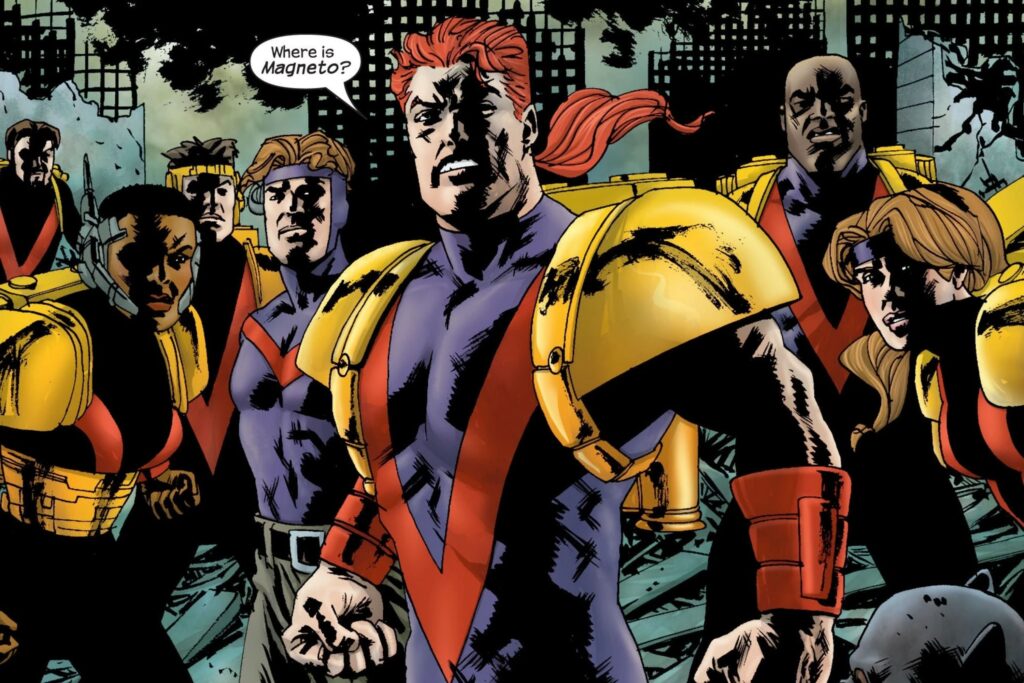
Magneto rarely stands alone for long. Give him an asteroid, a speech about mutant sovereignty, and five minutes of screen time, and the marvel acolytes assemble like it is a religious revival in low orbit.
They are not random henchmen. They are believers. They build Asteroid M. They defend it. They treat Magneto’s ideology as policy and prophecy at the same time.
If you keep seeing references to marvel acolytes members and wondering who actually matters, this will clear it up. We are grounding this in the comics that introduce them, the leadership shifts that redefine them, and the key names to know when someone asks who are the acolytes marvel readers still talk about.
Who Are the Acolytes in Marvel?
At their core, the marvel acolytes are a group of mutant followers devoted to Magneto. They believe in his dream of mutant superiority and mutant self rule. They see him as a savior figure. In some runs they treat him like a prophet.
The Acolytes form in the early 1990s during the height of X Men intensity. The founding architect is Fabian Cortez, a mutant with the power to amplify the abilities of others. He finds Magneto, convinces him to build a sanctuary for mutants, and helps establish the orbital base known as Asteroid M.
Asteroid M becomes the spiritual and political center of the marvel acolytes. It represents safety from human governments and a literal high ground over Earth. The symbolism is not subtle. Magneto does not do subtle.
The early marvel acolytes comics arcs appear primarily in Uncanny X Men and X Men titles around issues tied to Magneto’s return in the 1990s. The group debuts during the “Fatal Attractions” era, which also gives us one of the most infamous Magneto moments in X history. Yes, that one.
Why Magneto Attracts Followers Like This
Let us be honest. Magneto is charismatic in the way that revolutionary leaders are charismatic. He offers safety, dignity, and power to a group that faces constant persecution.
For young mutants who experience fear, discrimination, and government oversight, Magneto’s pitch lands hard.
- Mutants deserve sovereignty
- Humans will never accept you
- Strength prevents extinction
That message builds loyalty. It also builds a hierarchy.
The magneto acolytes members tend to share a few traits. They feel alienated from mainstream society. They respect power. They view compromise as weakness. Many have trauma tied to human aggression.
In the early arcs, Fabian Cortez manipulates Magneto’s anger to push more aggressive action. This tension becomes central to the group’s identity. The Acolytes are meant to be protectors of mutantkind. They often slide into enforcers.
Leadership changes over time. Magneto dies. He returns. He withdraws. He reconsiders. The Acolytes do not disappear when he does. They adapt. Later runs elevate Exodus as a dominant leader. Exodus embraces the religious tone of the group and amplifies it. Under him, the Acolytes lean harder into devotion.
If Magneto is a revolutionary general, Exodus is a crusader.
Acolytes Members
You asked about marvel acolytes members. Good. That is where the story gets personal.
There are many names on the roster. We will focus on the ones who shape the narrative and appear often enough to matter. You do not need a spreadsheet of obscure background mutants. You need the core players.
Fabian Cortez
Let us start with the problem.
Fabian Cortez is a mutant who can enhance other mutants’ powers. That sounds helpful. It also makes him dangerously influential around Magneto.
Cortez finds Magneto after a period of isolation. He flatters him. He pushes him. He frames Asteroid M as a necessary step for mutant survival. He encourages harsher responses to human aggression.
In early marvel acolytes arcs, Cortez often acts as the voice whispering in Magneto’s ear. He manipulates information. He stokes anger. He positions himself as indispensable.
Key reading:
- Uncanny X Men issues leading into “Fatal Attractions”
- X Men Vol. 2 during Magneto’s Asteroid M era
If you want to understand why the Acolytes tilt toward extremism, study Cortez.
Exodus
Exodus, also known as Bennet du Paris, becomes one of the most important Acolyte leaders. He is powerful on a telekinetic and telepathic level. He is also deeply ideological.
Exodus frames Magneto’s mission in almost spiritual language. He sees Magneto as a messianic figure. That tone defines many later Acolyte stories.
When readers ask “who are the acolytes marvel fans consider essential,” Exodus is near the top of the list.
Under his leadership:
- The Acolytes remain loyal to Magneto’s ideals even when Magneto is absent
- The religious devotion increases
- The group clashes with the X Men in philosophical debates as much as physical fights
Exodus shows up across multiple X titles, especially during stories tied to mutant nationalism and separatist movements.
Amelia Voght
Amelia Voght offers a more conflicted perspective.
She has a history with Professor X, which adds tension to her loyalty. She believes in Magneto’s vision but carries personal doubt.
Her power allows her to transform into a mist form. She often serves as a protector and voice of reason within the Acolytes.
Amelia represents the internal struggle within the marvel acolytes. Not every member is blindly fanatical. Some are there because they see no other safe option.
Joanna Cargill. Frenzy
Frenzy, real name Joanna Cargill, is physically formidable and ideologically firm.
She serves with the Acolytes for long stretches and later evolves in interesting directions within broader X Men continuity.
Frenzy embodies the militant side of the group. She believes in strength and survival. She does not apologize for it.
If you track magneto acolytes members across different eras, Frenzy’s arc shows how allegiance can shift while ideology lingers.
Scanner
Scanner has telepathic and sensory abilities. She acts as a reconnaissance asset and occasional moral counterpoint.
Her presence reinforces that the Acolytes function like a structured team. They are not just zealots floating in space. They have roles.
Neophyte
Neophyte is another key early member. His powers revolve around telekinetic manipulation of metal and energy constructs. He reflects the kind of young mutant who finds certainty in Magneto’s clarity.
He is powerful, devoted, and willing to act.
There are more marvel acolytes members. Random. Obscure. Occasionally named something dramatic like “Projector” or “Senyaka.” You do not need all of them to follow the big arcs.
If you want a simple mental map of the core lineup, here is a tight snapshot:
| Member | Role in the Acolytes | Ideological Tone |
| Fabian Cortez | Founder figure and manipulator | Political radicalism |
| Exodus | Spiritual leader | Religious devotion |
| Amelia Voght | Loyal but conflicted member | Thoughtful loyalty |
| Frenzy | Enforcer and soldier | Militant strength |
| Neophyte | Devoted young recruit | Absolute faith |
That list will carry you through most discussions about marvel acolytes comics without embarrassment.
How the Acolytes Differ From the Brotherhood
Now we address the inevitable confusion.
You hear Magneto. You think Brotherhood. Specifically the Brotherhood of Mutants. So what makes the marvel acolytes different?
The Brotherhood often operates as a terrorist cell or tactical strike group. It is mission focused. It recruits mutants who are angry and ready to fight. It changes rosters frequently.
The Acolytes function more like a nationalist movement with a headquarters.
Key differences:
- The Acolytes center around sanctuary and governance at Asteroid M
- They frame Magneto as a leader of a mutant nation
- Their rhetoric leans toward ideology and long term vision
- The Brotherhood focuses on tactical disruption
The Acolytes also place heavier emphasis on devotion. Under Exodus especially, loyalty becomes almost sacred.
If the Brotherhood is Magneto’s guerrilla wing, the Acolytes are his attempted state.
That distinction explains why the term marvel acolytes appears in stories dealing with mutant sovereignty, political asylum, and large scale conflict rather than simple street level clashes.
Where to Start Reading Marvel Acolytes Comics
You want clarity fast. Good. Here is your clean entry path into marvel acolytes comics without drowning in decades of continuity.
1. Fatal Attractions
This 1993 crossover arc runs through Uncanny X Men and X Men titles. It features Asteroid M, the Acolytes in full force, and a brutal confrontation between Magneto and the X Men.
You see:
- The structure of the Acolytes
- Fabian Cortez’s influence
- Magneto’s ideological breaking point
If you read one early arc about the marvel acolytes, make it this.
2. Exodus Centric Stories
Search for arcs where Exodus leads or heavily features. These often occur in the mid to late 1990s. They show how the group evolves when Magneto is absent or weakened.
You will understand:
- Why Exodus matters
- How the religious tone intensifies
- How the Acolytes sustain themselves without direct oversight
3. Magneto Solo Series and Mutant Nation Arcs
Later Magneto focused runs often reference the Acolytes or echo their themes. When Magneto experiments with mutant autonomy, the Acolytes’ philosophy resurfaces.
If you are trying to answer “who are the acolytes marvel stories treat as foundational,” these arcs reinforce their ideological weight.
The Acolytes in the Larger Magneto Timeline
To really get them, place the marvel acolytes within Magneto’s broader arc.
Magneto oscillates between antagonist and uneasy ally of the X Men. His ideology evolves. His tactics fluctuate. His commitment to mutant survival remains constant.
The Acolytes serve as proof that his ideas resonate beyond him. They persist when he falters.
If you are reading X Men stories and see references to:
- Asteroid M
- Mutant sanctuaries in orbit
- Exodus preaching Magneto’s vision
You are seeing the legacy of the marvel acolytes.
Your Fast Track Into Magneto Lore
Start Here If You Want to Sound Smart About Marvel Acolytes
You came in asking who the Acolytes are. You leave knowing:
- They originate around Fabian Cortez and Asteroid M
- They worship and follow Magneto’s vision of mutant sovereignty
- Exodus becomes a major leader and ideological amplifier
- They differ from the Brotherhood by focusing on nationhood and devotion
Read “Fatal Attractions.” Track Exodus arcs. Pay attention to Magneto’s nation building phases.
The next time someone drops “marvel acolytes members” into conversation, you will not blink. You will nod slowly. You will reference Asteroid M with confidence.
And if they ask “who are the acolytes marvel readers actually care about,” you will say Fabian Cortez and Exodus first. Because you read the right guide.
Now go float an asteroid responsibly.