

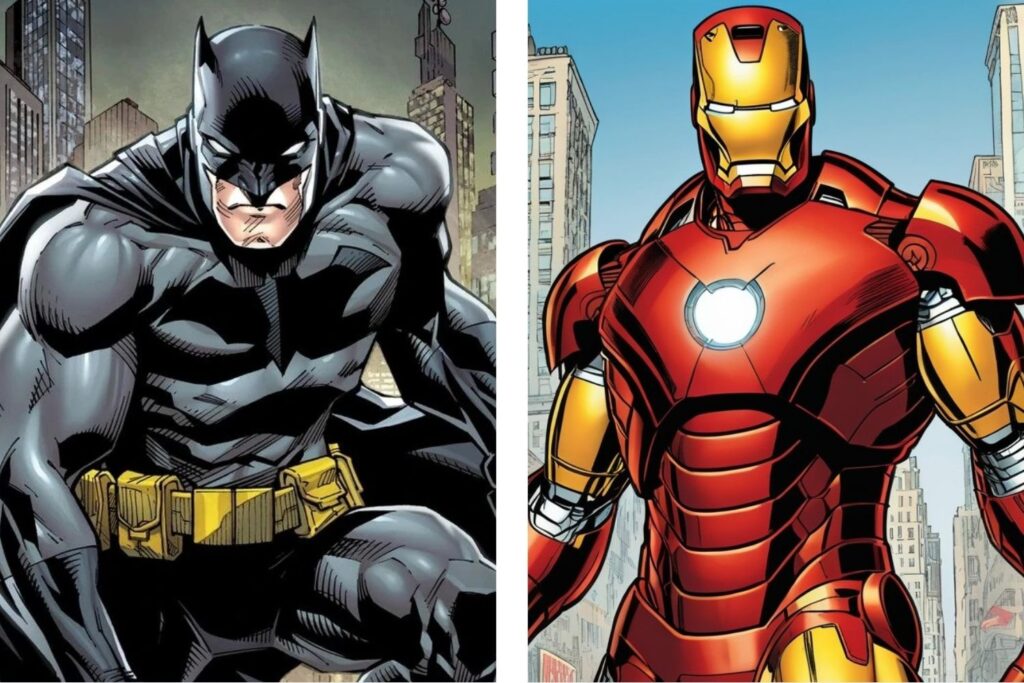
You can tell a lot about a person by which billionaire in a costume they emotionally invest in.
Some people want brooding rooftops and unresolved trauma. Others want repulsor blasts and quarterly earnings. This turns into a quiet identity over time. The kind that shows up in your pull list, your longboxes, and the way you defend fictional men in online arguments like it is a civic duty.
If you are deciding between batman vs iron man, you are not just picking a character. You are choosing a rhythm. You are choosing how stories unfold in your head.
You are choosing what kind of nonsense you are willing to financially support for the next few years.
Batman Vs Iron Man Overview Characters Worlds And Themes
At a glance, the comparison looks simple. Two wealthy men. Two genius-level intellects. Two wardrobes that cost more than small countries. The simplicity fades the moment you actually read their comics.
Batman operates in a world that feels carved out of shadow. Gotham is not just a setting. It is a pressure system that produces crime, obsession, and theatrical villains. Stories revolve around control, fear, and the idea that one person can impose order through sheer will.
Iron Man operates in a world that never stops moving. Corporations, governments, and global conflicts intersect with Tony Stark’s decisions. His stories carry the weight of consequence. He builds something. That something breaks. The fallout becomes the next arc.
This reflects the deeper difference between DC Comics and Marvel Comics.
DC leans into myth. Characters feel larger than life, almost symbolic. Batman exists as an idea as much as a person. Marvel leans into proximity. Characters feel like they could ruin their own lives in ways that feel uncomfortably familiar.
In the context of batman vs iron man, this shapes everything that follows. Batman stories feel like chapters in a legend. Iron Man stories feel like entries in a very public spiral that occasionally saves the world.
Batman Comics Vs Iron Man Comics Story Style And Tone
Reading Batman and reading Iron Man do not feel remotely the same. You can tell within a few pages which one you are holding. That difference becomes the deciding factor for most readers long before power levels or gadgets enter the conversation.
Batman Comic Themes And Storytelling Style
Batman comics operate with intention. Writers treat Gotham like a stage. Every arc feels composed. Every villain serves a purpose beyond punching practice.
You will see patterns emerge:
- Crime stories that unfold slowly, often with detective elements driving the pacing
- Psychological tension that pushes Bruce Wayne into uncomfortable territory
- Visual storytelling that leans into shadow, symbolism, and restraint
Key stories define how this tone works in practice.
- Batman: Year One establishes a grounded origin that focuses on corruption and systemic decay
- The Long Halloween builds a mystery that rewards attention and patience
- The Dark Knight Returns reframes Batman as an aging force that refuses to disappear
- Batman: Hush delivers a modern entry point with a wide cast and clean pacing
These stories feel deliberate. You can read them in isolation and still feel complete. That is not an accident. Batman works best when a writer treats each run like a self-contained thesis.
Iron Man Comic Themes And Storytelling Style
Iron Man comics feel reactive. That is part of the appeal. Tony Stark exists in motion. His world refuses to sit still for long.
Expect recurring elements:
- Technology that evolves constantly, often creating as many problems as it solves
- Corporate and political tension that bleeds into superhero conflicts
- Personal failure that never fully disappears, no matter how advanced the armor becomes
Key runs show how flexible this character can be.
- Demon in a Bottle centers on addiction and loss of control with a level of honesty that still holds up
- Extremis redefines the character through modern technology and bio-integration
- Armor Wars explores ownership and responsibility in a world where tech spreads quickly
- Invincible Iron Man by Matt Fraction builds a long-form narrative that rewards consistent reading
Iron Man thrives inside a connected universe. Events matter. Crossovers show up whether you invited them or not. You will follow threads into other titles. You will learn names you did not plan to learn.
Within batman vs iron man, this creates a different reading experience. Iron Man offers momentum. The story keeps moving, even when you are slightly behind.
Who Is The Better Character Batman Or Iron Man
This question refuses to die, so it deserves an answer that does not pretend both sides are identical.
Batman operates with precision. His identity remains consistent across decades. Writers reinterpret him, but the core stays intact. Trauma, discipline, control. These do not shift. They deepen.
Iron Man evolves. Tony Stark changes with the era. His flaws take center stage. His intelligence creates solutions and disasters in equal measure. He grows, regresses, and rebuilds himself repeatedly.
In a strict character analysis, Batman holds a structural advantage. His foundation supports endless reinterpretation without losing coherence. He feels timeless because the core rarely fractures.
Iron Man brings something different. He reflects the moment. Technology changes. Politics shift. Tony adapts, often poorly at first. That friction gives his stories a different kind of energy.
So in batman vs iron man, the better character depends on what you value. If you want consistency and thematic depth, Batman wins cleanly. If you want evolution and relevance, Iron Man keeps things interesting in ways that can surprise you.
Batman Vs Iron Man In The Comics Who Would Win
You knew this was coming. Try to keep it together.
A fight between these two depends entirely on context. Comics have never been shy about adjusting outcomes to fit the story, but patterns still exist.
Batman approaches conflict like a strategist. He gathers information, studies weaknesses, and builds contingencies. His victories often happen before the fight begins.
Iron Man approaches conflict like an engineer under pressure. He upgrades, adapts, and escalates. His suits change mid-battle. His response time closes gaps quickly.
Place them in a random encounter and the advantage leans toward Iron Man. The raw firepower and defensive capabilities create immediate pressure. Batman would struggle to respond without preparation.
Give Batman time and the equation shifts. He studies the armor. He identifies vulnerabilities. He builds a countermeasure that feels unfair because that is exactly the point.
In most comic interpretations of batman vs iron man, the outcome follows that pattern. Preparation determines the winner. Without it, Iron Man overwhelms. With it, Batman outmaneuvers.
Batman Reading Order And Best Comics To Start With
Batman offers one of the cleanest entry points in comics, which feels almost suspicious given how long he has existed.
A practical starting path keeps things focused while introducing core elements.
Begin with:
- Batman: Year One
- The Long Halloween
- Dark Victory
This sequence builds a foundation. You see Gotham evolve. You see Bruce refine his approach. You meet key figures without overload.
Move forward with:
- Batman: Hush
- Batman Vol. 1 The Court of Owls
These runs modernize the experience. The pacing tightens. The stakes expand. The mythology deepens without becoming inaccessible.
For readers comparing batman vs iron man, this structure matters. Batman respects your time. You can progress without constantly checking reading orders that look like tax documents.
Iron Man Reading Order And Best Comics To Start With
Iron Man requires a bit more intention at the start. The payoff comes from sticking with it long enough to see the character evolve.
A strong entry path balances classic and modern material.
Start with:
- Extremis
- Demon in a Bottle
These establish tone and character. You understand Tony’s mindset. You see how his flaws drive the narrative.
Continue with:
- Invincible Iron Man by Matt Fraction
- Armor Wars
At this stage, the world expands. Corporate stakes rise. Technology becomes central to every conflict.
You can branch into larger Marvel events once you feel comfortable. That step is optional. It depends on how deep you want to go.
In batman vs iron man, this is where Iron Man asks more from the reader. You trade simplicity for scale. Some readers prefer that. Others quietly return to Gotham.
Should You Collect Batman Or Iron Man Comics
Reading is one thing. Collecting introduces a completely different level of commitment that feels harmless until you start tracking values.
Batman sits at the top of the market for a reason. His key issues carry historical weight. Demand stays consistent. Prices reflect that reality.
Important issues include:
- Detective Comics #27
- Batman #1
- Batman #181
These books represent milestones. They also represent serious investment. Even lower-grade copies command attention.
Iron Man offers a more approachable entry into collecting.
Key issues include:
- Tales of Suspense #39
- Iron Man #55
- Iron Man #128
Prices fluctuate more. Interest spikes with renewed attention. The barrier to entry remains lower for most collectors.
The villain factor also plays a role. Batman’s rogues gallery drives long-term demand. First appearances of major villains carry weight across decades. Iron Man villains matter, though they rarely reach the same cultural impact.
When evaluating batman vs iron man from a collector perspective, the decision becomes practical. Batman offers stability with higher cost. Iron Man offers accessibility with more movement in value.
Batman Vs Iron Man For Collectors What Holds Value Over Time
Now we get into the part where people pretend this is about passion and not spreadsheets.
Collecting is not just about liking a character. It is about understanding what other collectors will care about five, ten, or twenty years from now. That is where batman vs iron man starts to look less like a fandom debate and more like a strategy conversation.
What Drives Batman Value
- First appearances of villains carry serious weight. Joker alone distorts the market
- Iconic storylines get reprinted constantly, which keeps demand alive for original issues
- The character’s consistency means older material rarely feels irrelevant
There is also the prestige factor. Owning a key Batman issue feels like owning a piece of comic history. That perception matters more than people admit.
What Drives Iron Man Value
- First appearances still matter, especially early Silver Age material
- Story arcs tied to Tony’s personal struggles tend to gain long-term appreciation
- Armor-focused issues attract a niche but dedicated group of collectors
Iron Man collectors often build around themes. Armor evolution. Stark Industries arcs. Tech-driven storylines. The collection becomes curated instead of purely milestone-driven.
A Quick Reality Check Table Because We Like Being Organized
| Factor | Batman | Iron Man |
| Market Stability | High and consistent | Moderate with fluctuations |
| Entry Cost | Expensive at the top | More accessible overall |
| Villain Impact | Extremely high | Moderate |
| Storyline Collectibility | Strong across decades | Strong in select arcs |
| Long-Term Demand | Reliable | Situational but resilient |
This is where batman vs iron man becomes a personal call. Some collectors want stability. They want books that feel safe even when the market shifts. Others enjoy the movement. They like spotting undervalued issues and watching interest build over time.
Batman Vs Iron Man And The Choice You Will Pretend Was Easy
The decision rarely stays clean for long. Most readers start with a preference, then drift into both because the medium has a way of pulling you deeper.
Batman gives you structure. Stories feel deliberate. The mythology holds steady even when writers change. You always know where you stand.
Iron Man gives you motion. The world shifts around him. His decisions ripple outward. You follow those ripples whether you planned to or not.
The better choice depends on how you like to read and how you plan to collect. Some people want control. Some people want momentum. Some people tell themselves they will pick one and stick to it, then end up reorganizing shelves at two in the morning.
That last group tends to understand batman vs iron man better than anyone else.