
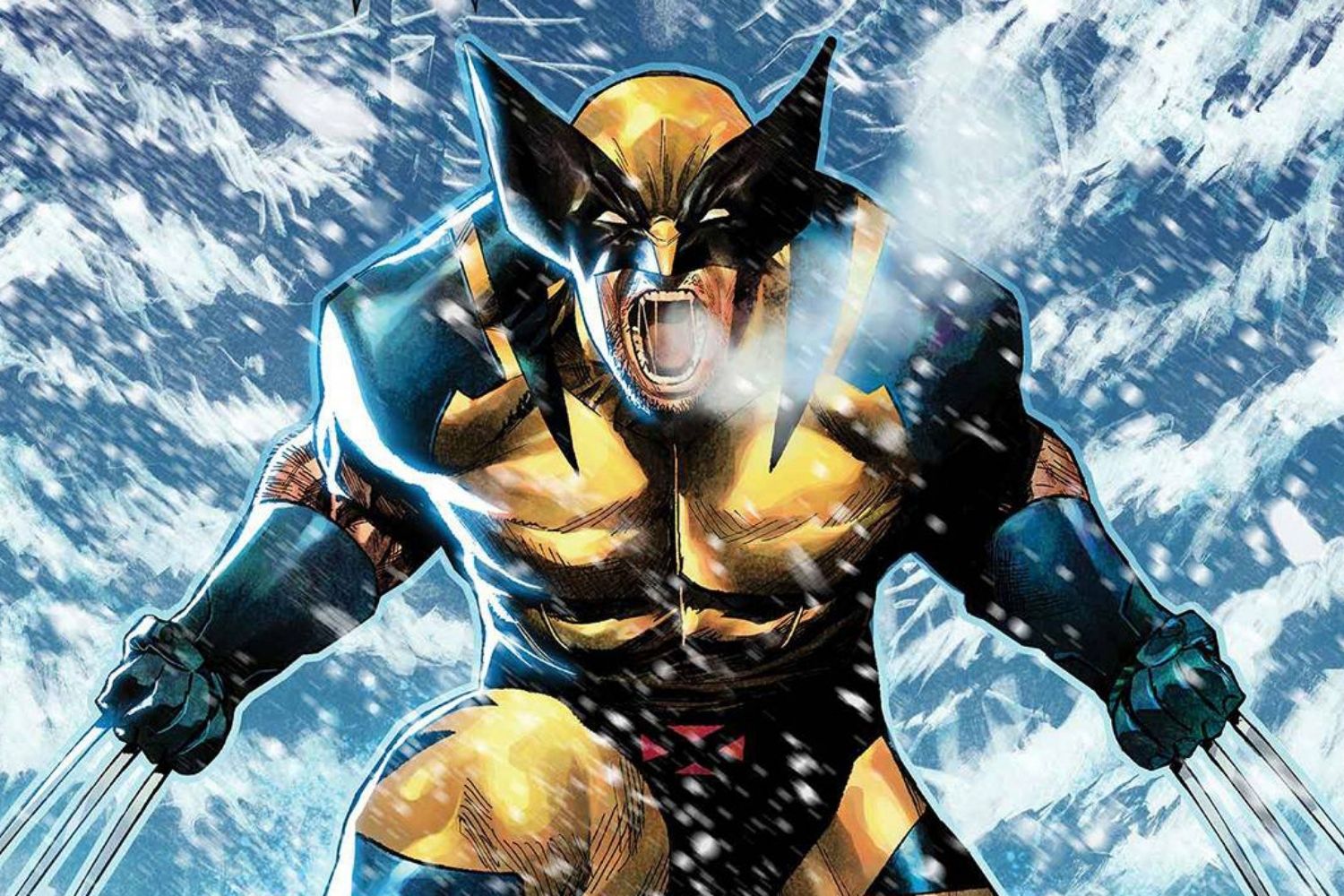
Wolverine has spent five decades proving that therapy is expensive, cigarettes are eternal, and every problem in the Marvel Universe can technically be solved with six knives attached to your hands.
This man has fought ninjas, the Hulk, robots, samurai, cyborgs, Dracula, the government, his own children, alternate timelines, and at least seventeen people named Sabretooth who somehow keep coming back looking even greasier than before.
Comic fans love Wolverine because he works in basically every genre. Crime story. Western. Horror. War comic. Samurai drama. Apocalypse survival nightmare. One minute he is drinking whiskey in a dive bar in Madripoor. The next minute he is cutting a Sentinel in half while screaming at Cyclops about leadership.
Nobody commits harder to being emotionally unavailable.
The problem is that Wolverine has appeared in approximately eight billion comics. Some are masterpieces. Some feel like Marvel handed a typewriter to a caffeinated raccoon.
Wolverine succeeds because writers figured out something very important early on.
The claws are cool. The trauma is cooler.
Most superheroes protect cities. Wolverine spends most of his time trying to outrun his own history. Every era of his life feels like a different comic genre.
That flexibility is why Wolverine comics age better than a lot of superhero books from the same era.
Batman fans are going to be angry reading that sentence. They will survive.
Another reason Wolverine stories work so well comes down to restraint. Or at least the illusion of restraint.
Logan always feels like he is one bad day away from becoming an absolute catastrophe. Writers keep circling the same question.
Is Wolverine a good man trying to act violent, or a violent man trying to act good?
That tension carries almost every great Wolverine comic.
Also, the healing factor lets artists draw him getting folded like laundry every other issue. Comic creators love that.
This should be a long list, but we’ll try to simmer it down for you.
Some Wolverine stories feel foundational. You read them because they shaped every version of the character that came after.
Somebody reading Wolverine comics without touching these stories is like somebody claiming they love pizza while only eating the crust.
If you only read one classic Wolverine comic, make it this one.
The 1982 limited series by Chris Claremont and Frank Miller basically reinvented Wolverine overnight. Before this run, Logan was mostly “the angry short guy from X Men.” After this comic, he became cool in a terrifyingly efficient way.
This story sends Wolverine to Japan after learning the woman he loves is marrying somebody else. Naturally, this leads to ninja warfare, organized crime, existential suffering, and Logan questioning whether he is an animal pretending to be human.
Normal breakup behavior.
Frank Miller’s art makes every panel feel dangerous. Claremont writes Wolverine like a man trying to drag himself toward honor while the universe keeps throwing swords at him.
This series also gave us one of the definitive Wolverine ideas.
Logan wants to be better.
That sounds obvious now. Back then, it changed everything.
Why it matters:
For collectors, this limited series remains one of the biggest Wolverine books outside his first appearances.
Weapon X is not fun. It rules.
Barry Windsor Smith’s Weapon X storyline from Marvel Comics Presents explains how Wolverine got his adamantium skeleton. The comic feels less like a superhero story and more like somebody adapted a panic attack into sequential art.
Scientists torture Logan through brutal experimentation while turning him into a living weapon. The visuals are horrifying. The narration feels clinical and detached. Wolverine barely speaks for long stretches because the story treats him like an animal trapped in a laboratory.
Honestly, this comic understands body horror better than a lot of actual horror comics.
The art deserves special attention. Barry Windsor Smith draws machinery and violence with obsessive detail. Every panel feels sweaty, metallic, claustrophobic, and deeply wrong.
Weapon X matters because it explains why Wolverine is so psychologically broken without making him feel weak. The story turns his origin into a violation instead of a superhero upgrade.
Comic fans spent decades arguing that Wolverine should never get a definitive origin story.
Then Marvel released Origin in 2001 and everyone begrudgingly admitted it was pretty good.
The series reveals Logan’s childhood in 19th century Canada under the name James Howlett. He starts as a sickly rich kid before trauma and violence slowly turn him into the feral wrecking machine everybody knows.
Origin works because it avoids making Logan feel too neat or over explained. The story keeps its gothic atmosphere intact. You still feel like Wolverine emerged from misery, violence, and isolation.
Also, little James popping bone claws for the first time remains one of Marvel’s nastiest emotional gut punches.
This comic is especially good for beginners because it gives context to Logan’s personality without requiring fifty years of X Men continuity.
Modern Wolverine stories lean harder into tragedy, brutality, and Logan’s inability to experience one peaceful afternoon.
Old Man Logan asks an important question.
What if Wolverine got so depressed that the entire Marvel Universe turned into Mad Max?
Mark Millar and Steve McNiven created one of Marvel’s biggest modern hits with this storyline. In this alternate future, villains have conquered America, superheroes are mostly dead, and Wolverine refuses to use his claws after a catastrophic personal failure.
Naturally, things go horribly wrong almost immediately.
The comic turns Marvel characters into twisted wasteland myths.
It sounds ridiculous because it absolutely is ridiculous.
It also works shockingly well.
McNiven’s artwork gives the story cinematic scale. Logan feels ancient and emotionally shattered. The violence lands harder because the comic treats every conflict like the remains of a dead superhero civilization.
This is one of the best Wolverine comics for modern readers because it moves fast, looks incredible, and requires almost zero continuity homework.
Also, Old Man Logan accidentally created about fourteen years of gritty alternate future comics where everybody wears dust coats and regrets.
Jason Aaron understood Wolverine better than a lot of writers because he leaned into the funniest possible truth.
Logan’s life is absurd.
Aaron’s run balances brutality with dark humor in ways that fit Wolverine perfectly. One issue feels like a psychological horror story. Another feels like a drunken action movie where Wolverine punches his way through increasingly stupid situations.
This era includes:
Aaron also writes Wolverine as genuinely tired. Not weak. Tired.
That exhaustion gives emotional weight to the violence.
There is a recurring sense that Logan keeps surviving things out of pure stubbornness because death itself is exhausted by dealing with him.
Which honestly sounds correct.
Comic deaths are fake. Everybody knows comic deaths are fake.
Marvel still managed to make Death of Wolverine feel important.
The premise is simple. Wolverine loses his healing factor. Suddenly every enemy on Earth realizes the immortal murder goblin can finally die.
Good luck with that.
Charles Soule’s storyline strips Wolverine down to basics. No healing. No safety net. Every fight becomes dangerous again. That vulnerability makes Logan feel more heroic than he has in years.
The ending also gives Wolverine one of the most visually iconic deaths in Marvel history.
Then he came back because this is comics and nobody stays dead except Uncle Ben and Batman’s parents.
A lot of new readers make the same mistake.
They only read Wolverine solo books.
That is like trying to understand Spider Man while refusing to read anything involving New York.
Wolverine becomes a much richer character inside X Men stories because the team dynamic exposes different sides of him.
Cyclops brings out Logan’s resentment toward authority. Jean Grey brings out his emotional disaster side. Kitty Pryde brings out his protective instincts. Nightcrawler reminds readers Wolverine actually has a soul somewhere beneath the stabbing.
Some essential X Men comics featuring Wolverine include:
Comic | Why It Matters |
Uncanny X Men by Chris Claremont | Built Wolverine into Marvel royalty |
Dark Phoenix Saga | Peak classic X Men tension |
Days of Future Past | Established Wolverine as dystopian survivor guy |
Kitty Pryde and Wolverine | Expands his Japan mythology |
New X Men by Grant Morrison | Wolverine becomes chaotic mentor energy |
Astonishing X Men by Joss Whedon and John Cassaday | One of the best modern team eras |
House of X and Powers of X | Wolverine survives another apocalypse because of course he does |
Claremont deserves special mention because he essentially sculpted Wolverine into the character fans know today.
Without Claremont, Logan probably stays “that hairy dude who yells a lot.”
Instead, he became the emotional center of half the X Men franchise.
Comic reading orders scare people because some fans treat continuity like a hostage situation.
Relax.
You do not need to read every Wolverine appearance from 1974 onward unless you enjoy suffering.
Here is a beginner friendly Wolverine reading order that actually works.
That sequence gives you:
Simple. Clean. Emotionally devastating.
If you want the full chronological reading experience, prepare for a timeline held together with duct tape and screaming.
Wolverine continuity includes memory wipes, fake memories, clones, alternate realities, dead sons, resurrected enemies, and approximately six million secret government programs.
At some point you simply accept the vibes.
Wolverine collectors operate with the intensity of treasure hunters who also own swords.
Some books matter because they are historically important. Some matter because the covers are gorgeous. Some matter because comic fans collectively decided they would cost one month of rent.
Here are the big ones.
Issue | Why Collectors Care |
Incredible Hulk #180 | Wolverine cameo appearance |
Incredible Hulk #181 | Wolverine full first appearance |
Giant Size X Men #1 | Wolverine joins the new X Men team |
Wolverine #1 (1982) | First solo Wolverine series |
Uncanny X Men #133 | Wolverine begins stepping into leadership territory |
Incredible Hulk #181 is the holy grail for many Wolverine collectors.
That issue has become absurdly expensive because it combines first appearance status with genuine cultural importance. Even non comic readers recognize the character.
According to major comic database resources like the Grand Comics Database, Hulk #181 remains one of Marvel’s most historically significant Bronze Age keys. urlGrand Comics Database Hulk 181
Modern Wolverine books also attract serious attention.
Especially first appearances connected to Wolverine lore.
Some major modern collectible books include:
Wolverine #88 deserves mention because Deadpool and Wolverine together basically print money now.
Comic stores see those two characters and immediately start hearing cash register noises.
Collectors should focus more on iconic stories and major first appearances than random gimmick variants.
Nobody needs twelve foil covers of Wolverine standing in fog.
Probably.
These two storylines dominate Wolverine discussions for good reason.
They represent opposite ends of the character. Weapon X shows Logan losing his humanity. Old Man Logan shows him trying to reclaim it.
Weapon X traps Wolverine inside a nightmare of experimentation and psychological destruction. The story strips him down until he becomes pure survival instinct.
Old Man Logan starts after decades of violence already destroyed the world. Logan refuses to fight because he cannot survive more guilt.
Both stories work because they force Wolverine into emotional extremes. Also, both comics understand an important truth.
Wolverine is at his best when he feels haunted. Not invincible. Haunted.
A bad Wolverine comic treats him like an action figure with claws.
A good Wolverine comic treats him like a man carrying around centuries of regret while pretending alcohol counts as therapy.
Here’s the easiest breakdown.
Honestly, there is no single perfect starting point because Wolverine works across so many genres.
That’s part of why the character lasts.
Batman can feel trapped inside Gotham. Spider Man needs New York. Wolverine can wander into almost any story type and somehow make it work.
The man has fought demons in Japan, survived frozen wildernesses, mentored mutant teenagers, and driven across a wasteland with old Hawkeye.
Half the time he smells terrible and makes terrible emotional decisions. Comic readers adore him anyway. Because beneath the claws, anger, and mountains of trauma, Wolverine stories usually come back to the same idea.
Logan wants redemption.
He just keeps trying to achieve it through extreme violence.
Marvel’s most Canadian disaster remains one of comics’ greatest characters because every great Wolverine story remembers that balance.