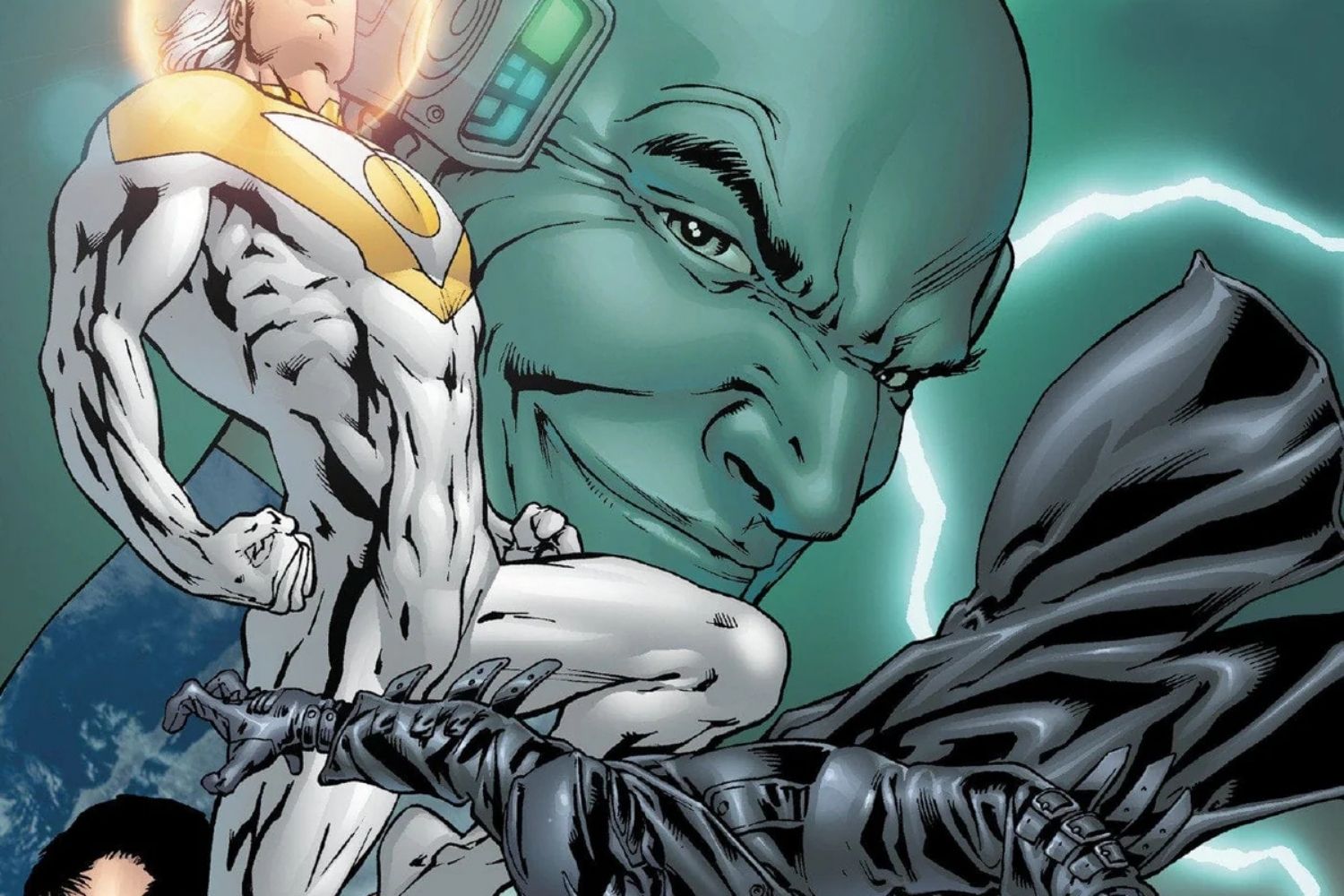
Stormwatch is one of those teams people know about without always having read.
They’ve heard the name. They know it leads to The Authority. They vaguely remember wild ’90s energy, weird costumes, and Warren Ellis doing something Important™.
But when you actually try to read Stormwatch?
You hit the wall. Issue renumberings. Relaunches. Crossovers. Trades that don’t clearly say what they include. And about five different internet opinions yelling, “JUST READ ELLIS.”
This Stormwatch reading order exists for two kinds of people:
Readers who want a clean, enjoyable path through the material
Collectors who want to know which issues, trades, and runs are actually worth hunting
We’ve read it. We’ve graded it. We’ve seen what people bring in and what they don’t.
Let’s make this easy (and honest).
Stormwatch matters for one huge reason:
It’s the bridge between classic ’90s WildStorm superhero teams and the modern, morally complicated comics that followed.
Before Stormwatch, WildStorm was flashy, loud, and sometimes shallow.
After Stormwatch (specifically the Warren Ellis era), everything changes—tone, stakes, politics, consequences.
This isn’t just a publication list. It’s a practical reading map:
No spoilers. No lore essays. Just clean guidance.
Let’s get the most common question out of the way.
Start here:
Stormwatch Vol. 1 #37–50 (Warren Ellis run)
Collected as:
This is the material that:
If you’ve heard “Stormwatch is basically a prologue to The Authority,” this is why.
Start earlier, but understand what you’re getting.
The early Stormwatch issues are very ’90s. That’s not an insult, just a warning label. They’re fun, messy, occasionally clunky, and historically interesting.
Think of it like early X-Force before it knew what it wanted to be.
Below is the publication order, with notes for readers and collectors.
Collected in:
Collector note: low-to-mid demand, but clean copies are getting scarcer.
Collected across multiple older trades, often harder to track down cleanly.
Collector note: This stretch matters more for context than keys.
This is the run everyone talks about, and for good reason.
Ellis:
If you only buy one chunk of Stormwatch, buy these.
Not everyone reads comics the same way. Here’s the honest breakdown.
Best for: New readers, Authority fans, modern comics readers
This path gives you:
Best for: Readers who enjoy ’90s comics but don’t need everything
You’ll understand how the team evolved without slogging through uneven stretches.
Best for: Collectors, WildStorm historians
This is the path for people who enjoy watching a book figure itself out in real time.
Best for: Readers using trades, compendiums, or digital apps
Stormwatch doesn’t exist in a vacuum, but you don’t need a spreadsheet to enjoy it.
Stormwatch overlaps loosely with:
These connections are mostly thematic, not required reading.
Stormwatch was later folded into DC continuity years after the original run.
That material is interesting—but not required for understanding classic Stormwatch.
This guide focuses on WildStorm-era Stormwatch, where the book actually shines.
From a grading and collecting perspective:
If you’re buying with intent, prioritize:
Stormwatch doesn’t always have to be about reading everything.
It can also be about reading the right things in the right order.
You can absolutely enjoy Stormwatch without drowning in ’90s excess.
You can jump straight to the material that reshaped WildStorm, and still feel like you “get it.”
That’s the sweet spot we aim for at Hovig:
knowledgeable reading, intentional collecting, and zero wasted effort.
Now go crack open Force of Nature—
and enjoy watching a team realize the world is way bigger, messier, and more dangerous than anyone planned.