


If you’ve spent any meaningful amount of time around the X-Men, you already know this truth: Gambit and Rogue are not just a couple. They are a long-running emotional experiment conducted across decades of comics, retcons, near-breakups, cosmic upgrades, memory wipes, weddings, separations, reconciliations, and writers desperately trying to outdo the last dramatic twist.
People keep asking the same questions about them because their story refuses to stay simple. Are Gambit and Rogue together? Why can Gambit touch Rogue? Do Gambit and Rogue have kids? Does Gambit cheat on Rogue? The answers exist, but they live inside messy continuity, evolving power mechanics, and Marvel’s eternal need for conflict.
So let’s do this properly. No shipping-war nonsense. No TikTok-level summaries.
Welcome to the definitive breakdown of Gambit and Rogue.
Gambit and Rogue: Two Mutants, One Extremely Complicated Equation
Before romance, drama, and emotional damage, there were two mutants with very different vibes.
Rogue arrived first as a powerhouse with a curse built into her skin. Her mutation steals memories, powers, and life force through physical contact. Touch became dangerous. Intimacy turned into risk. Normal human closeness vanished overnight.
Gambit entered later as a walking contradiction. A thief with charm, secrets, questionable morals, and a talent for explosive playing cards. He flirted like it was a profession and lied like it was a second language.
When they met, Marvel accidentally created something rare.
Not destiny. Not fairy tale.
They created tension that actually made sense.
Gambit didn’t “fix” Rogue. Rogue didn’t “save” Gambit. Their connection came from shared damage, shared loneliness, and mutual fascination.
That is why Gambit and Rogue never felt like a generic superhero couple.
They felt human.
And Marvel never let that stay peaceful for long.
Are Gambit and Rogue Together? Well…
Let’s address the big question directly: are Gambit and Rogue together?
Short answer: yes.
Long answer: yes, but only if you accept that Marvel treats relationships like soap operas with laser beams.
Across modern continuity, Gambit and Rogue are canonically married. They tied the knot in Mr. and Mrs. X after years of will-they-won’t-they tension. Their relationship stabilized in recent eras, especially in Krakoa-era storytelling.
That said, “together” in Marvel terms never means calm.
Their relationship has included:
- Long separations due to missions and moral disagreements
- Power shifts that changed how Rogue experiences touch
- Secrets from Gambit’s past catching up to him
- Emotional distance caused by trauma and memory manipulation
- Writers intentionally stirring chaos because stable couples do not sell comics
So yes, Gambit and Rogue are together.
They just exist in a universe where happiness is always temporary.
So, Why Can’t Rogue Touch Gambit?
The question why can’t Rogue touch Gambit? exists because Rogue’s mutation does not play nice with biology.
- Memories
- Mutant powers
- Physical vitality
- Emotional imprints
When she touches someone, even briefly, she drains them. Prolonged contact can kill.
For most of her early history, Rogue had zero control over this ability. That meant no hand-holding, no hugs, no kisses, no casual intimacy.
Gambit didn’t get special treatment.
He just got closer than most people dared.
The tragedy of Gambit and Rogue comes from the fact that their emotional bond outpaced their physical reality. They wanted closeness that her mutation literally made impossible.
And Marvel leaned into that pain relentlessly.
Can Gambit Touch Rogue? Yes, But Only When the Universe Decides to Be Nice
Now let’s flip the question: can Gambit touch Rogue?
Sometimes yes.
Sometimes no.
Sometimes, only after cosmic interventions, power upgrades, or reality-altering events.
Across different eras, Rogue gained varying degrees of control over her powers. At certain points, she could touch people safely for limited periods. In other storylines, external forces altered her mutation entirely.
Notable shifts include:
- Temporary control over her absorption ability
- Power dampeners and technological solutions
- Cosmic-level transformations affecting her mutation
- Reality resets that rewrote how her powers function
Every time Rogue gained control, Marvel tested it against her relationship with Gambit.
Because if Gambit and Rogue could touch freely forever, the tension disappeared. And Marvel hates disappearing tension.
So the rule kept changing.
Not because of bad writing.
Because emotional stakes sell issues.
The Gambit and Rogue Relationship: Why It Works When It Shouldn’t
The Gambit and Rogue relationship works because neither character is perfect.
Gambit carries guilt from past crimes, manipulations, and morally gray choices. He often withholds information because he thinks protecting people means controlling the truth.
Rogue carries fear of hurting those she loves and a constant awareness that her body is dangerous.
Together, they form a relationship built on:
- Mutual understanding of isolation
- Shared distrust of authority
- Emotional honesty that emerges slowly
- A willingness to choose each other despite risk
This is why fans never stopped caring about them.
Their love story feels earned rather than manufactured.
And yes, Marvel still finds ways to sabotage it regularly.
Best Comics to Read for Gambit and Rogue (The “Don’t Waste Your Time” Edition)
If you want to understand Gambit and Rogue without drowning in decades of continuity, start here.
Comic 1: Rogue & Gambit (2018)
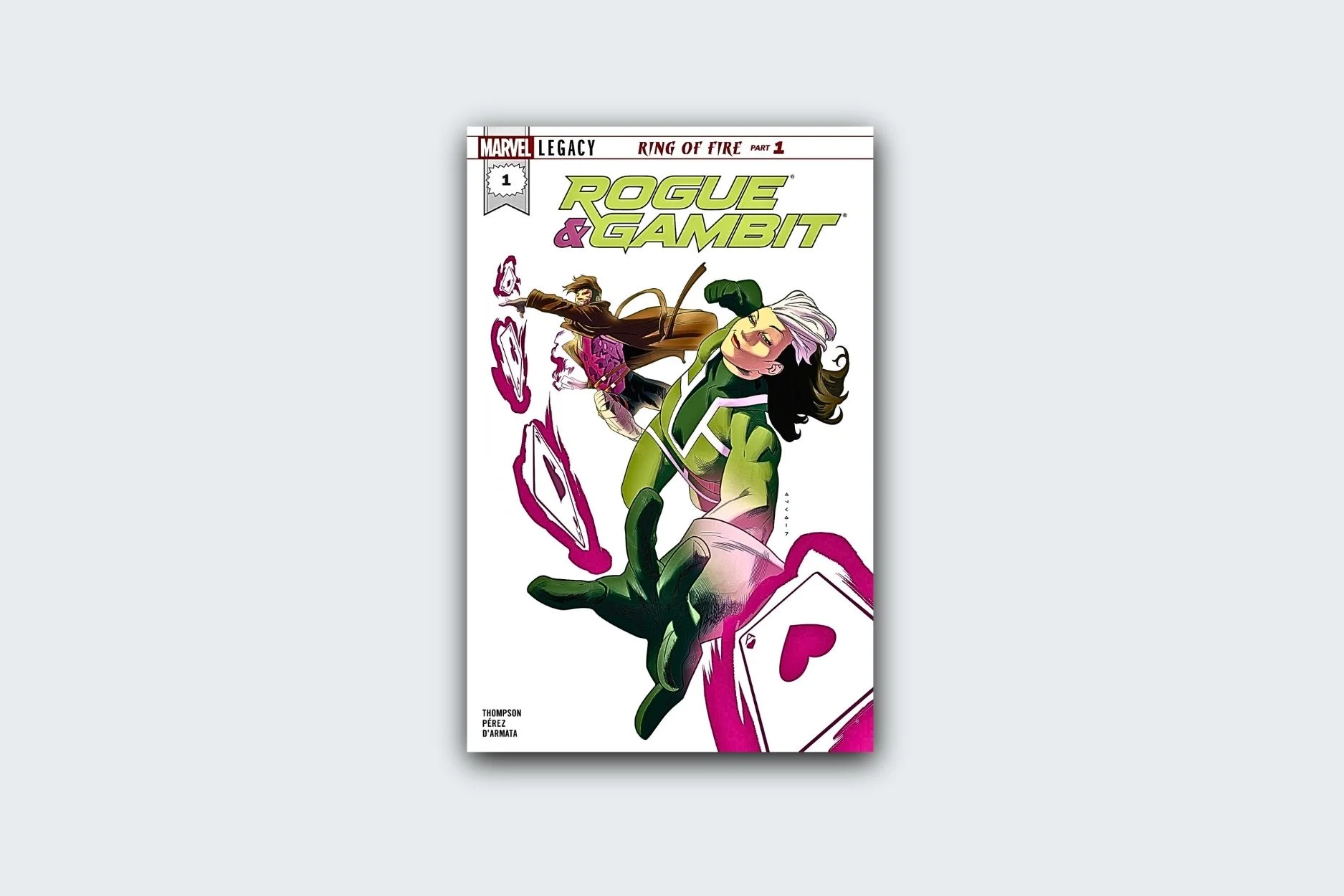
This mini-series is essential reading.
It reframes their relationship with modern emotional clarity and sharper character writing. Rogue and Gambit go on a mission together, confront unresolved issues, and finally address the elephant in the room: trust.
Why it matters:
- Shows their dynamic without outdated tropes
- Explains why they struggle to stay together
- Acts as a clean entry point for new readers
Collector angle:
- Strong modern key for fans of character-driven X-Men stories
- Popular trade paperback for casual readers
If you read only one modern story about Gambit and Rogue, make it this one.
Comic 2: Mr. and Mrs. X (2018–2019)
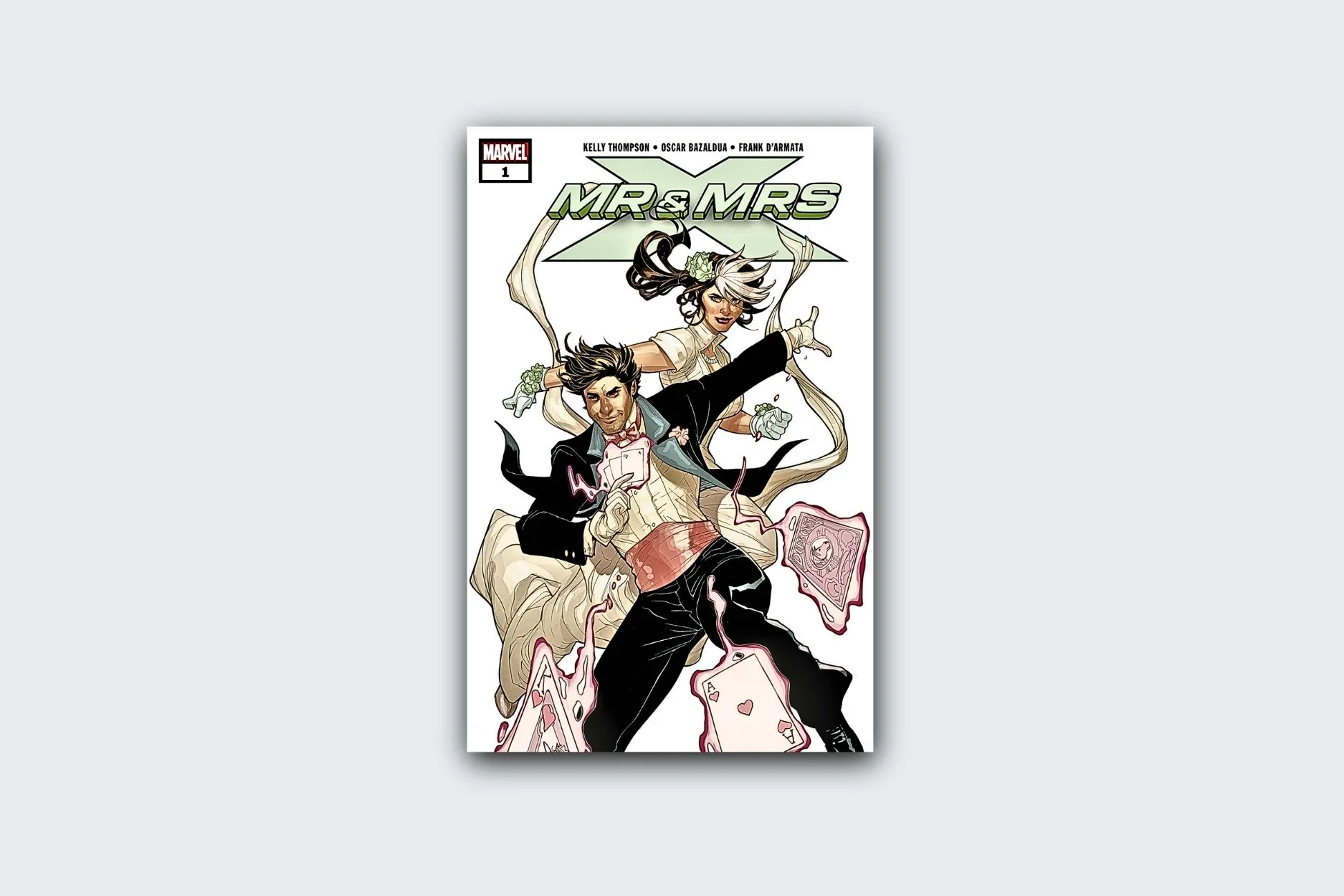
This series begins with their wedding and immediately throws them into chaos. Because Marvel.
It explores what happens after the romantic payoff. Marriage does not solve their problems. It amplifies them.
Why it matters:
- Confirms their canon status as a couple
- Balances romance with superhero insanity
- Shows how their bond functions under pressure
Collector angle:
- Key issues tied to their marriage
- Growing interest among collectors who focus on mutant couples
Together, these two series form the modern backbone of Gambit and Rogue.
If you want more, dive into classic Uncanny X-Men runs, but start here unless you enjoy reading with a spreadsheet.
Do Gambit and Rogue Have Kids? Canon, Alternate Universes, and Chaos
Now the fun question: do Gambit and Rogue have kids?
In main Marvel continuity, the answer is no.
In alternate timelines, the answer is yes.
Marvel loves using alternate futures to explore possibilities without committing to them. Across different universes, versions of Rogue and Gambit have children, often with powers inherited from both parents.
These stories exist in:
- Alternate futures
- What-if scenarios
- Non-canon timelines
- Reality-warped story arcs
Why Marvel avoids giving them kids in main continuity:
- Children stabilize relationships
- Stable relationships reduce drama
- Reduced drama reduces editorial excitement
So while Gambit and Rogue kids exist in theory, Marvel keeps them out of core canon to preserve narrative tension.
Which is equal parts logical and frustrating.
Does Gambit Cheat on Rogue? The Answer Nobody Likes
Let’s tackle the uncomfortable one: does Gambit cheat on Rogue?
The honest answer depends on continuity, interpretation, and definitions.
Gambit has a long history as a flirt, thief, and morally flexible charmer. Before fully committing to Rogue, he had relationships with multiple characters. After becoming serious with Rogue, things become more complicated.
In core canon:
- Gambit is not consistently portrayed as a cheater
- His biggest sins involve secrets rather than infidelity
- Writers occasionally imply emotional distance rather than betrayal
In alternate stories:
- Some versions of Gambit cross lines
- Others remain fiercely loyal
Marvel deliberately avoids giving a definitive answer because ambiguity fuels debate.
So if you’re asking does Gambit cheat on Rogue? the most accurate answer is: not in a way Marvel wants to lock into permanent canon.
Which is editorial language for “we might need this plot later.”
Why Gambit and Rogue Became the X-Men’s Most Enduring Romance
Plenty of X-Men couples exist. Few survive decades of publishing chaos.
Gambit and Rogue endured because their relationship operates on emotional logic rather than gimmicks.
They are not opposites for the sake of drama. They are mirrors with different flaws.
Their story persists because:
- Their emotional stakes feel grounded
- Their conflicts arise from character traits rather than random events
- Their romance evolves instead of resetting completely
Readers grow with them.
That is rare in superhero comics.
Collector’s Guide: Key Issues That Actually Matter
If you’re approaching Gambit and Rogue from a collector mindset, focus on issues that shaped their dynamic.
Key categories worth hunting:
- First major interactions in Uncanny X-Men
- Rogue & Gambit (2018) #1
- Mr. and Mrs. X #1
- Issues featuring major shifts in Rogue’s powers
- Alternate future stories featuring their descendants
Why these matter:
- They mark narrative turning points
- They hold long-term fan significance
- They anchor modern interpretations of their relationship
You do not need every issue ever printed. You need the ones that changed the trajectory.
That is how serious collectors think.
Why People Keep Googling Gambit and Rogue (And Why That Makes Sense)
The reason Gambit and Rogue dominate search queries is simple.
Their relationship refuses to settle into a neat summary.
People want to know:
- Are Gambit and Rogue together?
- Why can Gambit touch Rogue?
- Can Gambit touch Rogue permanently?
- Do Gambit and Rogue have kids?
- Does Gambit cheat on Rogue?
Each question reveals how unstable their narrative has been across decades.
That instability is not a flaw.
It is the engine of their popularity.
Gambit and Rogue Are Chaos, Chemistry, and Canon Rolled Into One
If you strip away continuity headaches, editorial interference, and retcons, what remains is surprisingly simple.
Gambit and Rogue represent a love story built on risk.
Risk of physical harm.
Risk of emotional betrayal.
Risk of vulnerability.
Marvel could have resolved their problems permanently at any point.
They chose not to.
Because a romance that feels fragile lasts longer in readers’ minds than one that feels safe.
And if you’re looking for where to start reading Gambit and Rogue, you already have the map.
Just don’t expect their story to ever behave itself.
It never has. And honestly, that’s the whole point.